
DuraFlex Chimney Sweep in Bayside: A Homeowner’s Guide
Most liner failures we’re asked to look at aren’t material failures. They’re installation failures caused by pouring a DuraFlex system into a flue that was never properly cleared, measured, or inspected first. The product gets blamed for a shortcut taken before it ever went in. If you’re researching DuraFlex chimney liner installation in Bayside and want to know how to judge whether the job was done right, this guide covers the prep work that actually determines how long a liner lasts. If you’d rather hand it to someone who does this daily, call (833) 482-5742.
What Is DuraFlex, Exactly?
DuraFlex is a castable refractory resurfacing system used to restore a deteriorating flue from the inside, not a metal liner you slide down the chimney. In our experience, this is where the confusion starts for most Bayside homeowners. A metal liner is a discrete pipe; DuraFlex is a material that is applied to the existing flue wall and cures into a hard, smooth, heat-rated surface. When we talk about a DuraFlex chimney sweep in Bayside, we mean the sweep and inspection work that has to happen before the material is ever applied.
It’s designed to fix a specific set of problems:
- Spalling or flaking flue tiles, where the clay is breaking down
- Hairline cracks and gaps between tile joints that let combustion gases escape
- A flue interior that is rough enough to catch and hold creosote
- An existing flue that is structurally sound on the outside but failing inside
It is not a fix for a flue with structural failure, a collapsed or missing liner, or a chimney that has shifted. Those need a different answer, often a DuraFlex flexible liner system or a full rebuild. Knowing which situation you’re in starts with a proper inspection, not a sales call. Our technicians have up to 13 years of experience reading exactly that difference, and we’ll tell you plainly when DuraFlex is the wrong tool for the job.
Why a Level 2 Inspection Has to Come First
A Level 2 inspection must precede any DuraFlex application because it’s the only step that reveals the actual condition of the flue interior and tells you whether resurfacing is even viable. It’s not paperwork. It’s the decision point. Without it, a contractor is guessing, and you’re paying for a guess.
Here’s what a proper Level 2 inspection shows that a quick glance down the flue does not:
- The geometry of the flue. Offset flues, transitions, and odd sizes change how DuraFlex is applied and how much is needed.
- Hidden damage. Cracks behind a damper, gaps at a thimble connection, or a breach that a flashlight won’t catch.
- Obstructions. Nests, debris, or a disconnected liner section blocking the path.
- Whether the flue is even clean enough to accept the material. This is the step most often rushed.
A Level 2 inspection includes a camera run, and you should see the footage. If a contractor can’t show you what they saw, that’s your signal to get a second opinion. We include a camera inspection and photo report with the work so you’re looking at the same evidence we are. If the flue turns out to need chimney repair rather than resurfacing, you’ll know before anyone starts mixing material.
The Sweep Step Nobody Should Skip
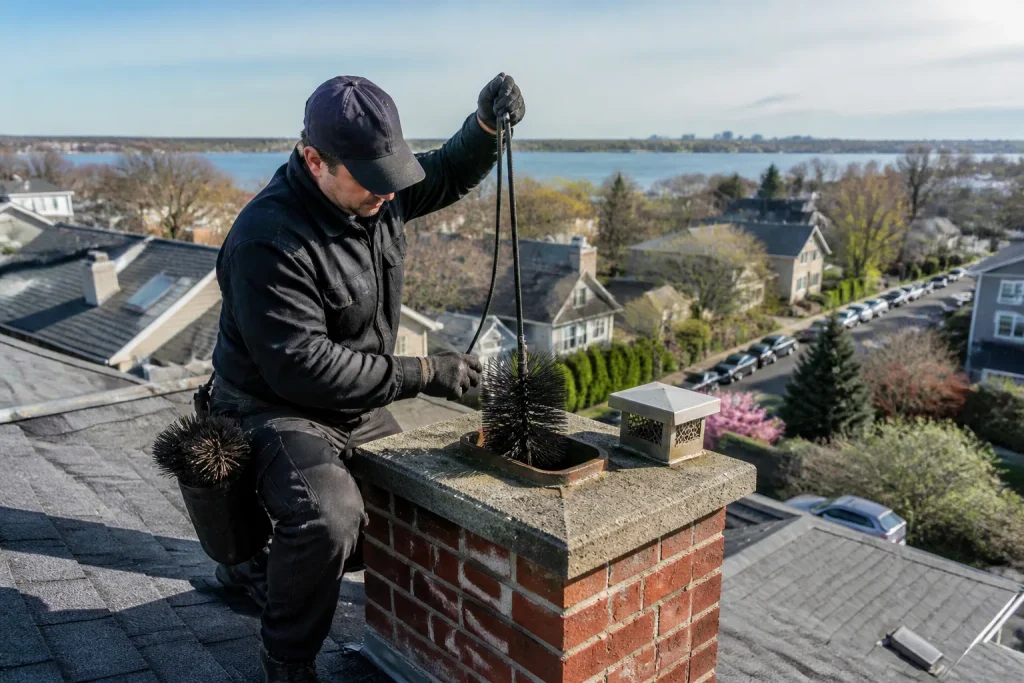
Contaminants left in the flue compromise adhesion and void manufacturer guidelines, which is why the sweep is not an add-on to a DuraFlex job. It’s part of the job. Creosote, soot film, and glaze residue all sit between the flue wall and the resurfacing material. Apply over that and you’ve built a liner with a built-in detachment point.
What a proper sweep before resurfacing involves in Bayside:
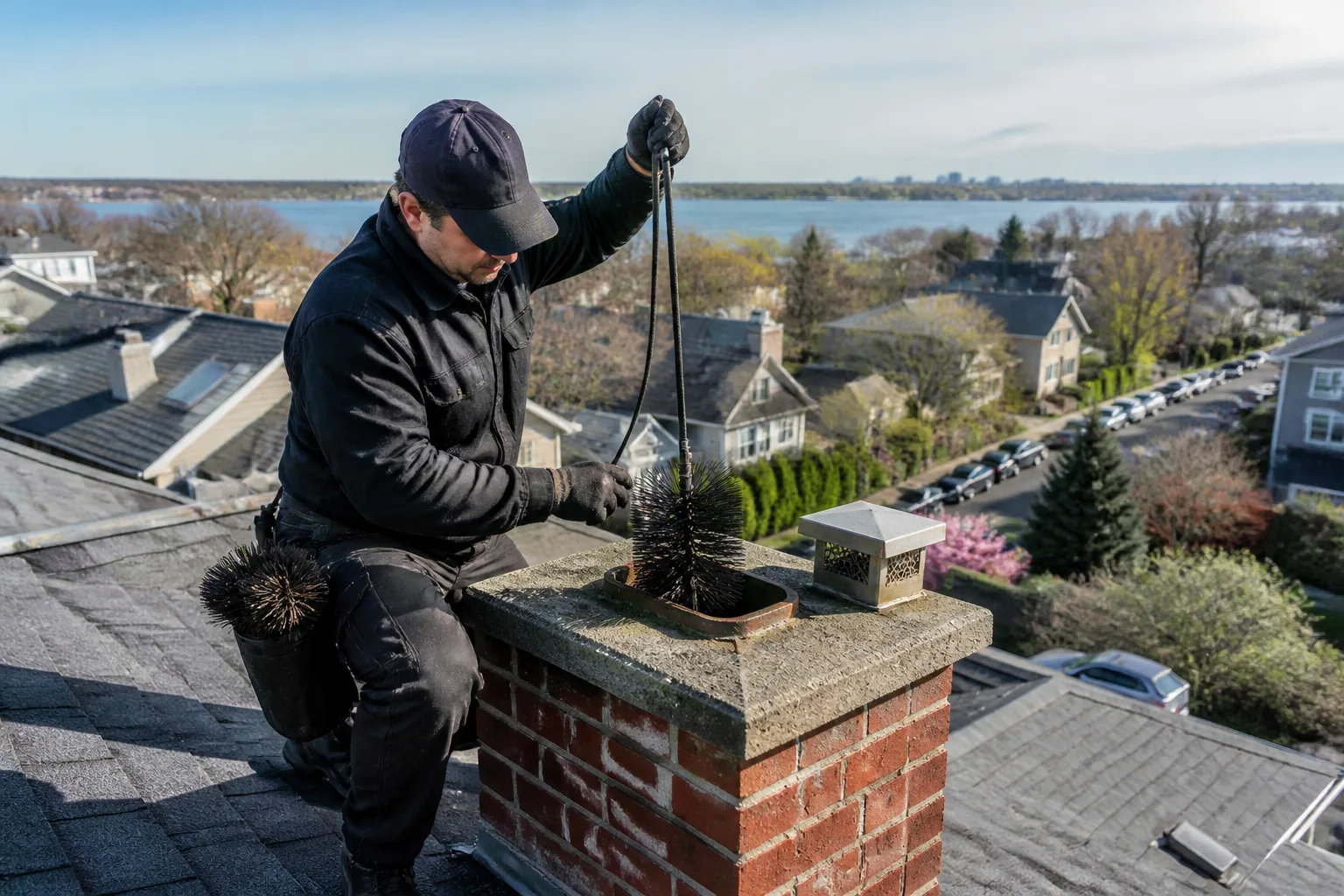
- Mechanical sweeping of the full flue, bottom to top, not just the firebox throat
- Removal of glaze-stage creosote, which does not come off with a standard brush pass
- Clearing of the smoke chamber and shelf area, where debris collects and hides
- A clean-out of the base so material application starts from a clear surface
Skipping this step is where corners get cut, and it’s invisible to the homeowner until years later. A clean flue is a safe flue, and it’s also the only flue a manufacturer will stand behind. When we schedule a chimney sweep, the sweep and the inspection happen together so nothing gets decided on a dirty surface. That’s the difference between a resurfacing that lasts and one that fails early.
How to Read a DuraFlex Estimate
A thorough DuraFlex estimate includes the inspection, the sweep, prep and priming, the material application, and cap work, listed as separate line items, because a price for “the liner” alone is a price for part of a job. When you’re comparing quotes in Bayside, the shape of the estimate tells you more than the bottom number.
Look for these line items. If they’re missing, ask why.
- Level 2 inspection with camera and report – the basis for everything else
- Flue cleaning and surface prep – not lumped into “materials”
- Primer or bonding step – the surface prep that makes adhesion work
- Application thickness and cure time – stated, not hand-waved
- Top termination and cap – see our chimney cap & crown work, since the top of the system has to match the inside
An estimate that’s just a number, with no inspection and no breakdown, is the estimate to be suspicious of. A proper one walks you through what the flue needs and why. If we find the flue is sound and only needs a sweep, we’ll say so and send you on your way. That’s a better outcome for you than a liner you didn’t need.
How Long Does DuraFlex Last in Bayside?
DuraFlex, applied correctly over a properly prepared and inspected flue, is designed to serve for many years, and the single biggest variable in that lifespan is the prep work, not the material. That’s the honest answer. We won’t hand you a number in years that no manufacturer would guarantee, but we can tell you what shortens it.
What affects longevity, in order of impact:
- Whether the flue was clean and sound before application. Contaminants or missed cracks are the top cause of early failure.
- Whether the cap was addressed. Water entering from the top degrades any flue system from the inside. A cap and crown that shed water properly protect the investment.
- How the fireplace is used. Burning unseasoned wood or regularly overheating the flue shortens any liner’s life.
- Whether the flue is swept and inspected on schedule. A yearly sweep catches problems before they cost you.
Bayside homes tend to see weather that swings hard between seasons, and that cycle is what tests a liner’s surface over time. The resurfacing is only as good as the prep and the cap that protect it. From the firebox to the chimney cap, one crew handles it, start to finish.
When to Call a Pro Instead of Watching It
If you’ve noticed flaking tile in the firebox, a rough or crumbling flue interior visible with a flashlight, or creosote that’s built up past a thin film, it’s time to call. These aren’t conditions to diagnose from the hearth with a phone camera. A flue has to be measured, cleaned, and inspected with equipment, and resurfacing materials need proper handling and cure conditions. We’re glad to explain what we’re doing and why, but the application itself is a trained-technician job. If a flue is failing, the risk is combustion gases entering the home, and that’s not a maybe. Call us and let someone look. Free estimates, and we’ll tell you if the work can safely wait.
Related services in Bayside: chimney repair, chimney cap & crown, and chimney sweep.
The Bottom Line
DuraFlex is a castable resurfacing system, and it works. But it only works when it’s applied over a flue that’s been inspected, measured, and swept clean first. The prep is the job. Judge an installer by what they show you before they start: the camera footage, the written estimate with its line items, and the willingness to tell you when you don’t need the work. That’s the standard to hold anyone to in Bayside.
We handle DuraFlex resurfacing in-house through our full-lifecycle service, alongside HeatShield, Olympia Chimney, Famco, and Copperfield work, so the crew that diagnoses your flue is the crew that fixes it. No handing off the most critical part to a subcontractor. If you’re in Bayside and need help, Chimney Sweep Bayside offers free estimates. Call (833) 482-5742 to get one. We answer 24/7, and fast dispatch runs from 7am to 7pm.
Frequently Asked Questions
No. DuraFlex is a castable refractory resurfacing system, not a metal pipe. It’s applied to a prepared flue wall and cures into a heat-rated surface. If your flue needs a metal liner, that’s a different material and a different job, and we handle those too.
Yes. Contaminants left in the flue compromise adhesion and void manufacturer guidelines, so the sweep is part of the job, not an extra. Skip it and you’re paying for a liner that can fail early. Call (833) 482-5742 to book a sweep and inspection together.
You don’t, until a Level 2 inspection with a camera tells you. Flaking tile, rough interior surfaces, and cracked joints point toward resurfacing, but a camera run confirms it and shows the scope. We include a photo report so you can see what we see.
You get a liner installed over a dirty or damaged flue, which is the most common reason these jobs fail early. Over time that means the cost of doing it twice. Call (833) 482-5742 and we’ll walk you through what the job actually requires before you decide.
Written by the team at Chimney Sweep Bayside.
Need Chimney Cleaning Help?
Call Chimney Sweep Bayside - the local pro we connect you with is licensed and insured, here with fast help in Bayside.
(833) 482-5742