
Last updated November 25, 2026
 Sweep & inspection
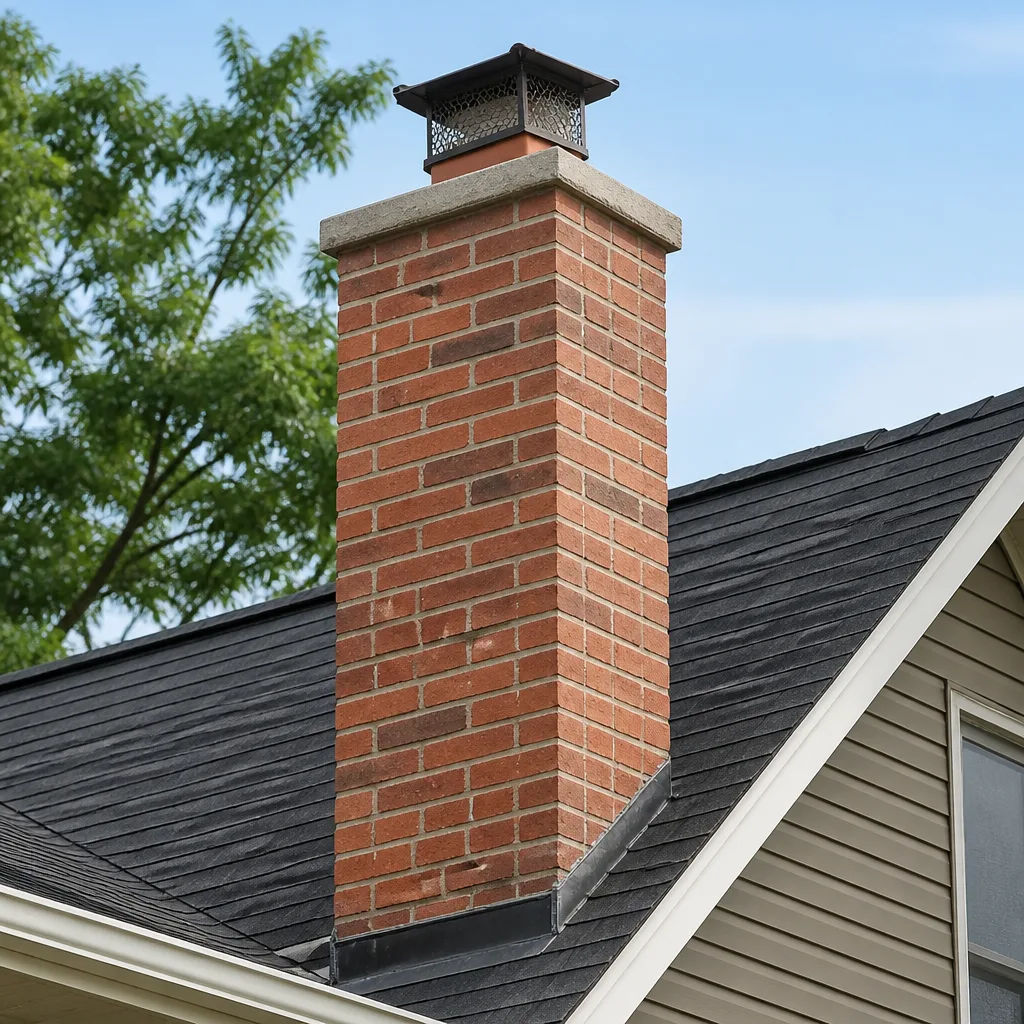
 Caps & crowns
 Flue relining
 Masonry repair
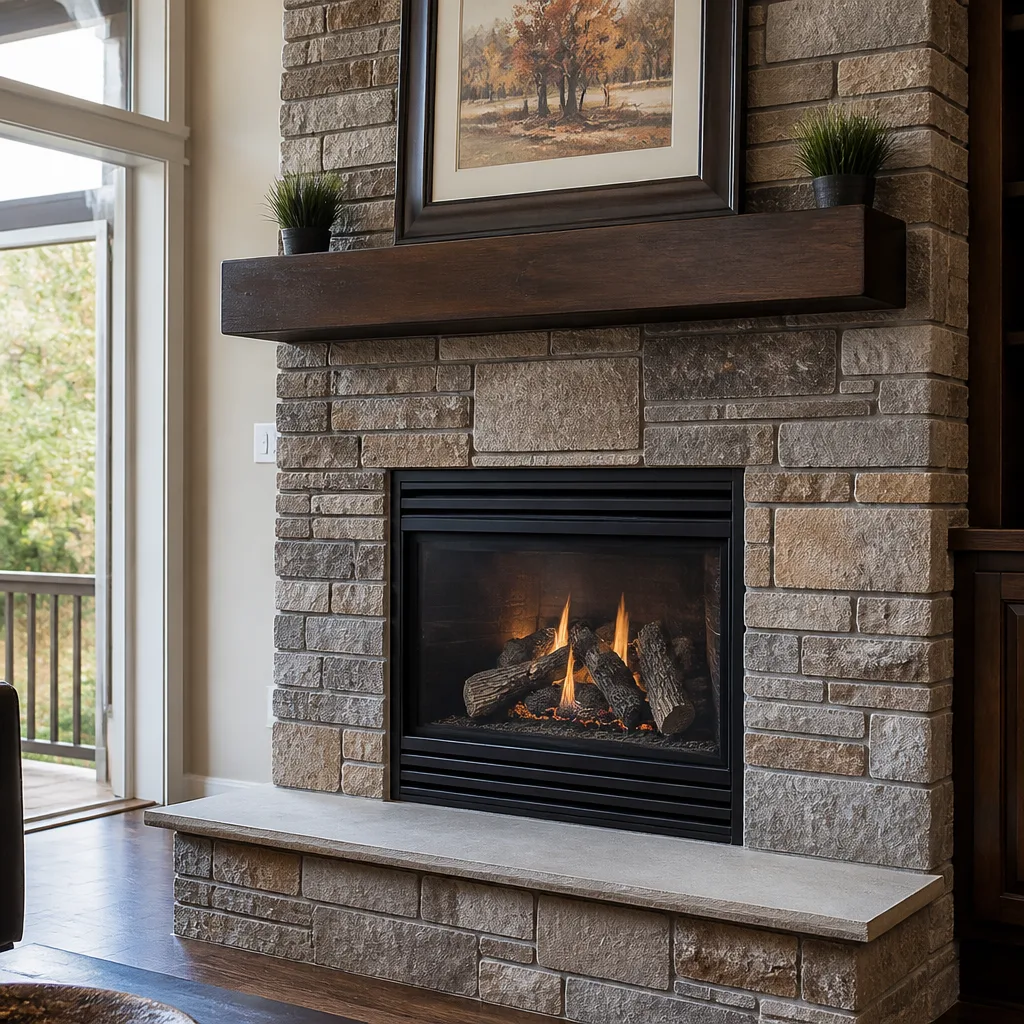 Gas fireplace service
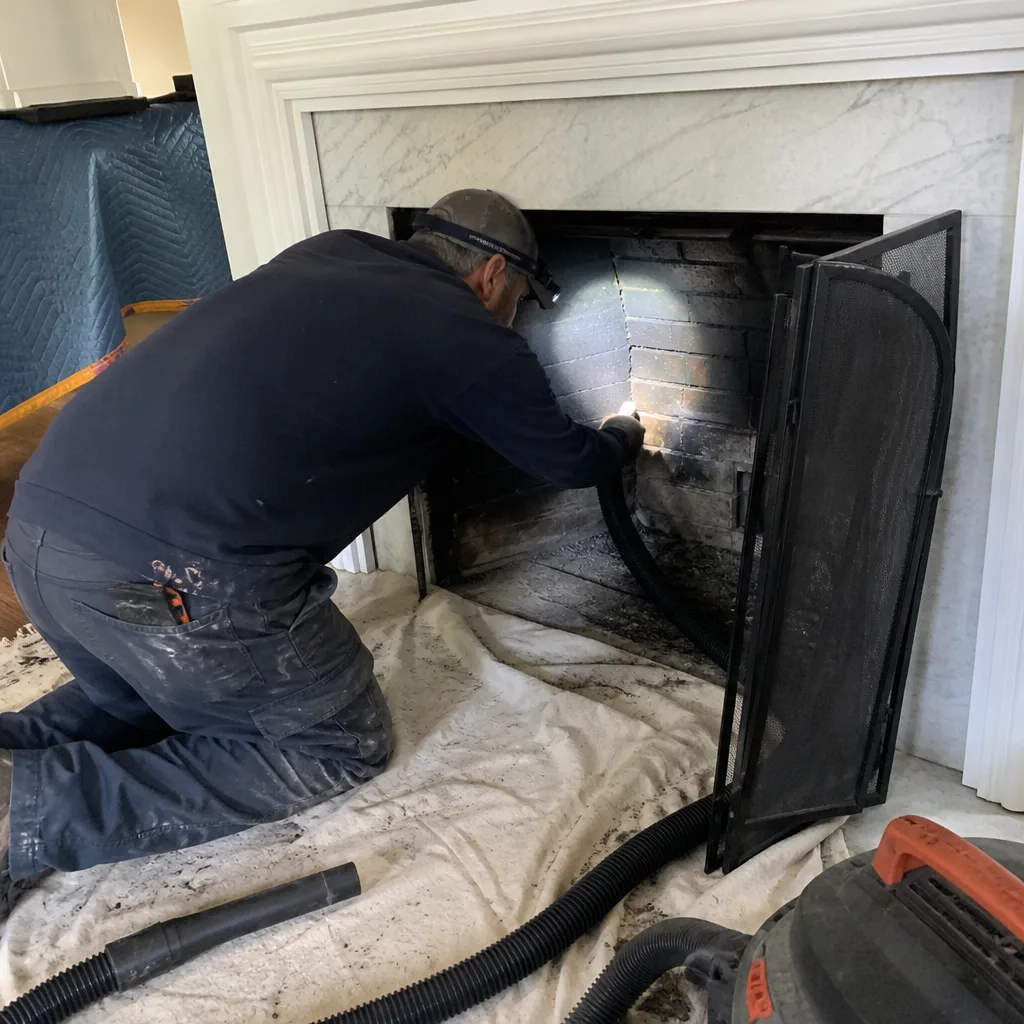
Level 1 sweep and inspection to the NFPA 211 annual standard - flue, crown, cap, and flashing checked and photographed
Chimney sweep logs do not sweep chimneys. They loosen some creosote - which then falls where a brush and vacuum still have to collect it.
Chimney Cleaning Warning Signs: A Bayside Homeowner’s Reference Guide
Most warning sign guides hand you a list and stop there. “White staining on the brick – call a sweep. Cracked crown – call a sweep.” That’s fine as far as it goes, but it leaves you unable to judge whether you’re looking at a cosmetic nuisance or a problem that needs a fire extinguished today. A white stain on exterior chimney brick isn’t cosmetic – it’s efflorescence, and it means water is already moving through your masonry. The stain is the evidence left after the water evaporated, not the problem itself. Bayside homeowners live with masonry chimneys exposed to damp winters and freeze-thaw cycles that punish neglect, and knowing the mechanism behind each sign is what lets you sort the “schedule soon” items from the “don’t light a fire” ones.
Quick Answer
The chimney warning signs that mean stop using the fireplace immediately are: a crack you can see through in the flue, a strong creosote smell indoors when the fire isn’t burning, spalled brick faces falling off the chimney, soot streaking on the firebox glass of a gas insert, or a firebox floor that has settled away from the walls. Everything else – surface staining, a hazy flue, a little mortar crumbling at the joints – should be scheduled for inspection but doesn’t require you to stop using the fireplace. The difference between the two categories is whether the structure that keeps fire and carbon monoxide inside the flue is still intact.
Styles & brands we work with
- Sweep & inspection
- Caps & crowns
- Flue relining
- Masonry repair
- Gas fireplace service
Table of Contents
- Why the Mechanism Matters More Than the Sign
- Creosote and Soot: What the Deposit Is Telling You
- White Staining, Efflorescence, and Water in the Masonry
- Spalling Brick and Crumbling Mortar: When Cosmetic Becomes Structural
- A Smoky Fireplace in Bayside: Four Causes, Four Fixes
- The Two Warning Signs Unique to Gas Inserts
- The “It’s Always Done That” Trap in Older Bayside Homes
- The Urgency Triage: What Waits, What Doesn’t
Why the Mechanism Matters More Than the Sign
If you know a warning sign exists but not what it means, you can’t act on it with any confidence. You either ignore it because it’s been there for years, or you panic and assume the whole chimney needs rebuilding. Neither response gets you to the right decision. Our technicians have up to 13 years of experience, and one thing that experience teaches is that homes with the same visible symptom can be in wildly different condition underneath.
Take a smoky fireplace, one of the most common complaints we hear from Bayside homeowners. Four different failures produce the same symptom, and each has a different fix:
- Flue blockage or heavy deposit. Soot, a fallen brick, or an animal nest narrows the flue so smoke can’t climb fast enough. A sweep clears it.
- Oversized firebox relative to the flue. The flue was undersized to begin with or the firebox was rebuilt larger than the flue can handle. No amount of sweeping fixes this; the flue needs resizing or a liner system.
- House draft reversal. Tight modern windows and kitchen and bath exhaust fans pull harder than the chimney can offset. The fire smokes, the house smells, but the chimney itself is fine.
- Cracked or deteriorated flue liner. Smoke and heat escape sideways instead of going up. This is the dangerous one – the fix is relining, not cleaning.
Each of those items produces the same visible problem. That’s why a proper inspection before every job matters: the camera shows which of the four you actually have before anyone quotes work.
Creosote and Soot: What the Deposit Is Telling You
Creosote is the byproduct of incomplete combustion, and it’s what every fire deposit adds to the flue over time. It’s also flammable. It comes in three forms, and the difference matters for how it gets removed.
- Stage 1 – soot and light flaky creosote. The simplest form. Gray, dusty, or flaky and easily brushed loose with a standard sweep.
- Stage 2 – hard, crusty, shiny deposit. Baked deeper into the flue wall. Some of it brushes loose, but the harder sections need more abrasion and time than a basic sweep.
- Stage 3 – glazed creosote. A glossy, tarry coating that won’t come off with a brush at all. It’s the most flammable form and needs mechanical or chemical removal before the chimney can be safely used.
Why does this matter? Because warning signs of creosote buildup tend to be quiet ones. A restricted draw that makes fires burn lazily, a blackened firebox, a strong campfire-mixed-with-varnish smell when the fire is out. The smell is a strong signal in itself: creosote that reaches the top of the flue to the room and the smell travels through the house when the fire’s out, that’s a real buildup, not a background nuisance. The deposits can reach the furnace flue too, including in Bayside, and on internal furnace flues, creosote requires prompt removal.
We work with chimney cap & crown and flue components from brand lines like Copperfield and Olympia Chimney, but that’s the repair side of the equation. The recognition side starts here: a smoky, sluggish fire after months of use is your cue to book a sweep before the flue deposits get harder to remove.
White Staining, Efflorescence, and Water in the Masonry
Here’s the sign that gets misdiagnosed more than any other. A chalky white deposit on the exterior masonry is not a surface blemish. It’s efflorescence: mineral salts pushed out of the brick as water travels through and evaporates on the surface. It means one thing unambiguously, water is moving through the brickwork.
The water can come from several places:
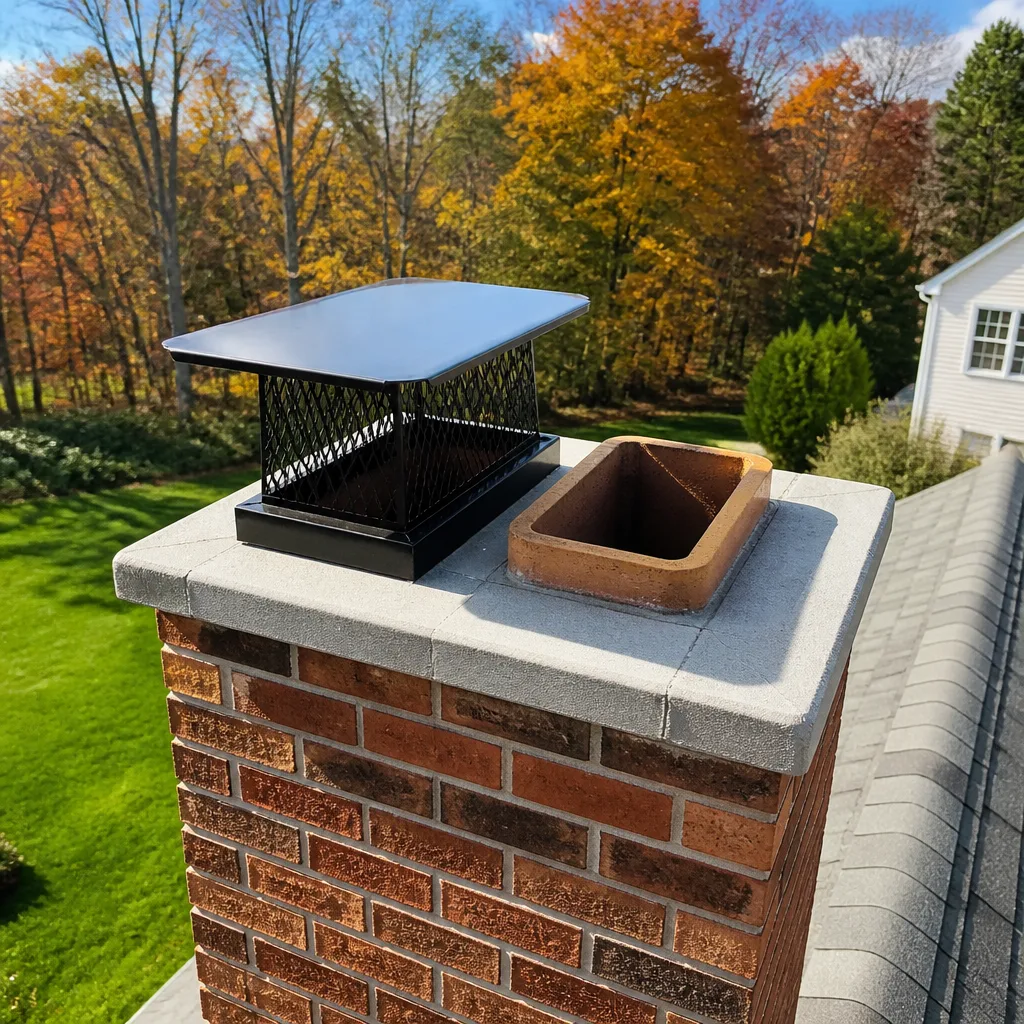
- A failed crown. The concrete crown at the top of the chimney is supposed to shed water away from the masonry. When it cracks or pulls away from the flue, water runs down the flue wall instead of off the top.
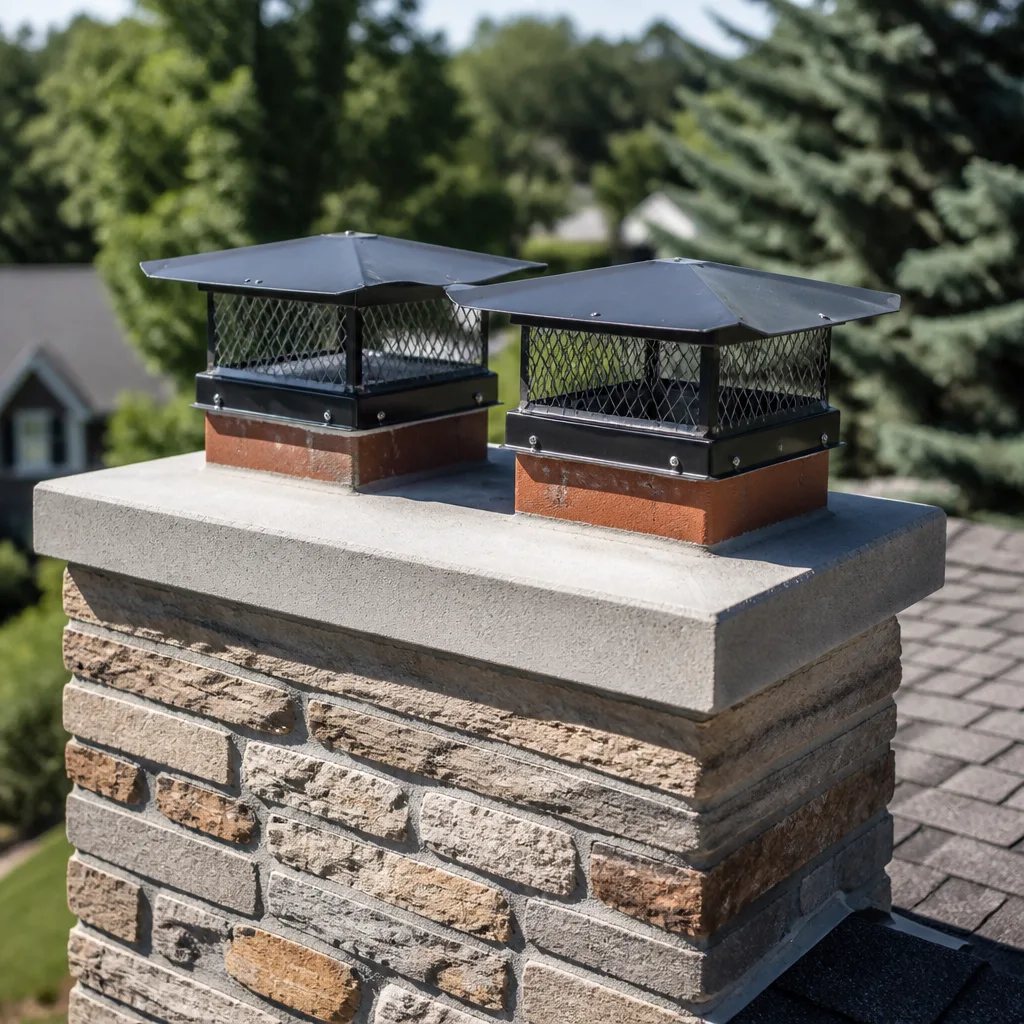
- Missing or damaged cap. A cap keeps rain out of the flue opening. Without one, the flue funnel is open to the sky.
- Failed flashing at the roofline. The metal flashing that bridges the roof and chimney pulls loose or rusts through. Water tracks down the chimney’s exterior face.
- Missing or failed mortar at the exterior joints. Fine hairline joints are normal; spalling or crumbling at the mortar joints lets water in behind the brick face.
Once water is inside the masonry, it does two things. In summer, it evaporates out and the cycle repeats. In a Bayside winter, water inside the brick freezes and expands, and freeze-thaw cycles inside a closed brick face crack it from the inside out. That’s how the cosmetic sign becomes structural. A chalky stain today often means a crumbling face next spring. A single sweep won’t address it; if the crown has failed, we use crown materials from brand lines like Copperfield and Gelco depending on the repair, and interior flue condition gets assessed separately.
Spalling Brick and Crumbling Mortar: When Cosmetic Becomes Structural
Mortar weathering and brick spalling look similar at a glance, but they mean very different things. Let’s separate them.
Cosmetic: minor mortar weathering
Mortar is intentionally softer than the brick it holds. Over years it weathers and recedes slightly at the joints. Light, even weathering across the chimney face that doesn’t expose a gap behind the brick is normal masonry aging. It should be monitored, but it’s not a crisis.
Structural: spalling brick faces
Spalling means the front face of a brick has cracked off and fallen. You find broken brick faces at the base of the chimney or scattered on the roof below it. Spalling comes from water trapped inside the brick, and it’s a structural warning. Each spalled face leaves the brick’s inner core exposed to more moisture – the next freeze-thaw cycle makes it worse. By the time you’re seeing brick chips regularly, the outer layer of the chimney is failing.
Three more structural signs to watch for:
- A cracked crown. Cracks visible in the crown from the ground, or a crown visibly peeling away from the flue wall. Every crack is a direct water path into the masonry.
- A settled firebox floor. Look inside the firebox. The brick floor should sit flush with the walls on all sides. If there’s a gap or crack where the floor meets the walls, heat and embers can reach whatever’s underneath. This is a stop-use condition until a professional looks at it.
- Leaning chimney. Even a slight lean or a visible gap where the chimney meets the roof means the chimney structure has shifted. Call before you burn again.
Where we find structural deterioration like this, we use proven FlueStik interior systems from brands like HeatShield to rehabilitate brick and flue interiors that a general sweep can only clean around. Chamfers before Firelighting.
A Smoky Fireplace in Bayside: Four Causes, Four Fixes
Smoke spilling into the room rather than climbing the flue is the most common symptom we get called about in Bayside. It’s also the hardest to solve without evidence, because the four realistic causes look identical from the couch.
1. Blocked or narrowed flue
Heavy deposits, debris, or a fallen brick in the flue narrow the path. A camera inspection will reveal it, then a chimney sweep clears it.
2. Pressure imbalance
New windows, added insulation, or a kitchen exhaust fan can make the house tighter than the flue can pull against. The chimney itself is fine. A test inspection tells you whether this is the cause in about the time it takes to light a fire.
3. Undersized flue for the firebox
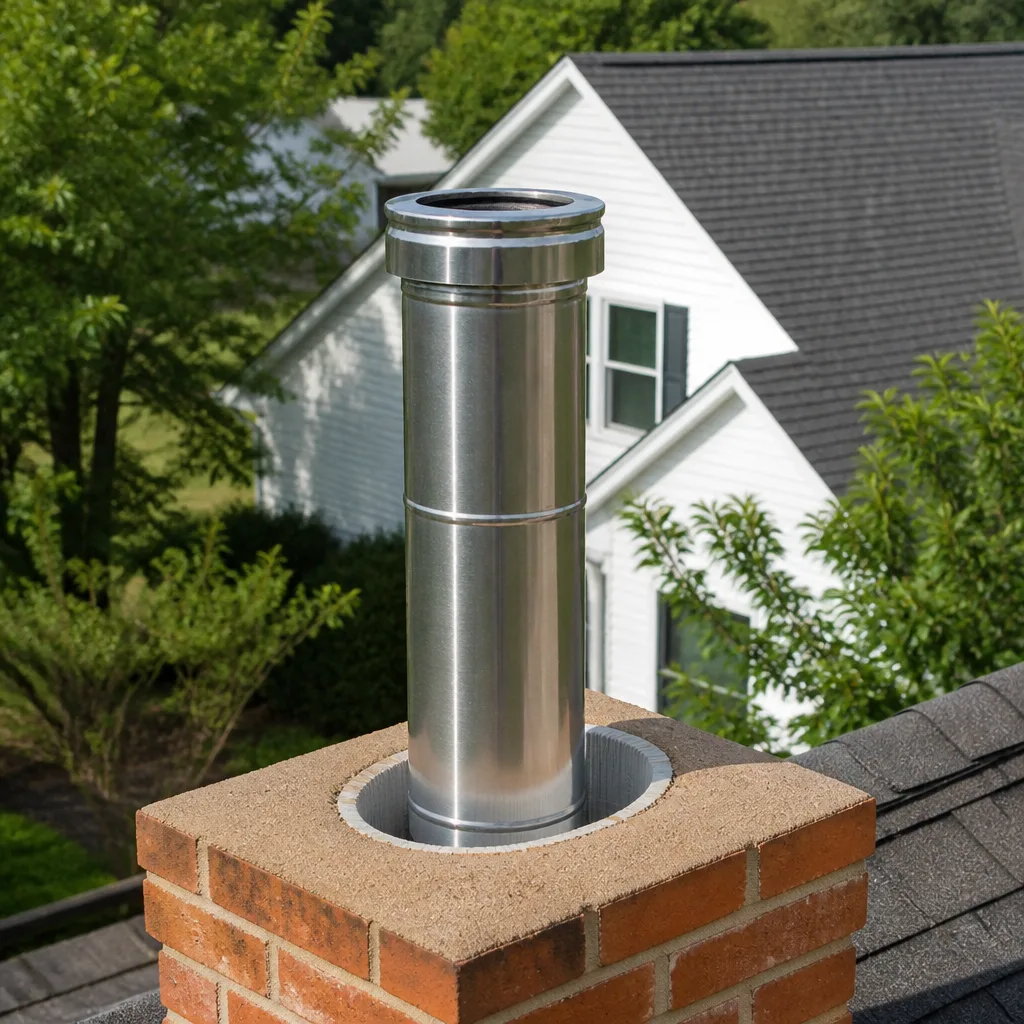
If the fit is wrong, the flue can’t move the volume of smoke from the firebox opening. A flexible liner system sized to the firebox solves it. We install DuraFlex flexible liner systems in-house, so the same technicians who diagnose the problem do the relining. No subcontractor in the middle.
4. Cracked flue liner
Smoke and heat escape into the surrounding masonry. This is the dangerous one: it’s also a carbon monoxide pathway. Relining with a system like DuraFlex, or resurfacing with HeatShield ceramic, restores the flue’s gas-tight barrier.
Start by narrowing your own case: does the fire smoke on every burn or just on cold starts? Does it smoke more with the kitchen fan on? If smoke only rolls out on ignition and the fire settles down, the likely culprit is a cold flue or a pressure issue. If it smokes continuously, stop using the fireplace until we’ve inspected the flue. Our camera inspection with photo report is included in every diagnostic sweep so you can see the flue exactly as we do.
The Two Warning Signs Unique to Gas Inserts
Every wood-burning warning sign list treats gas fireplaces as an afterthought, and Bayside has plenty of gas inserts whose owners don’t think of themselves as chimney owners. That’s a mistake. Here are the two signs that matter specifically for gas inserts:
Yellow-tipping flames
A healthy gas flame burns blue with a small yellow tip. A flame that’s mostly yellow or orange across the whole burner indicates incomplete combustion, which produces carbon monoxide. Yellow-tipping flames are not a cosmetic preference, get a professional to check the burner gas composition and the venting. A yellow flame on a gas insert is the single clearest visual signal for a venting problem.
Soot on the firebox glass
Visible soot or black streaking on the glass door of a gas insert means combustion products are depositing inside the firebox instead of leaving through the flue. It’s the same signal as blackening in a wood firebox: incomplete venting or incomplete combustion. A gas insert that soots its own glass needs its venting and gas flow inspected, not just wiped clean.
Gas insert flues still need inspection even without a burning wood fire. We use Galco liner systems and venting components where a replacement liner is needed. If you have a gas insert with soot on the glass or yellow-tipped flames, book an inspection and stop using it until a technician clears it.
The “It’s Always Done That” Trap in Older Bayside Homes
The most dangerous warning sign is the one you’ve stopped noticing. Many older homes in Bayside have had the same fireplace for decades, and a “quirk” that’s been there as long as anyone can remember feels safe by default. It isn’t, and the reason is that the underlying material degrades even when nothing about the visible symptom changes.
Typical examples of signs homeowners have normalized:
- The “takes a while to draw” fireplace. Smoke rolls in on every lighting, then clears. Four causes, as covered above, and at least one of them is a cracked liner.
- A faint smell in the room after burning. Creosote smell is often explained away as “the fireplace smell.” If the smell is still there hours after the fire is out, that’s a sign of serious buildup.
- A slightly leaning chimney. Passed down as a curiosity from the previous owner. It’s a structural shift, not quirks.
- Blackened firebox brick. “Just patina.” Blackening is a sign of incomplete combustion or restricted draw, not decorative aging.
- A fireplace that’s never been inspected since purchase. Very common. A chimney that hasn’t been opened up for a camera inspection is unknown territory, however long it’s “worked fine.”
Water intrusion, spalled faces, and cracked liners all progress slowly. They don’t announce themselves with smoke in the room; they announce themselves with yearly changes too small for a homeowner at ground level to track. That’s exactly why an annual inspection catches problems before they become emergencies. Missing or degraded parts caught in year one are a repair; the same sign caught in year five is a rebuild. Our technicians have up to 13 years of experience working with both wood-burning masonry chimneys and gas-burning insert systems, and can tell you which of these signs actually matter in your home.
The Urgency Triage: What Waits, What Doesn’t
Given all these warning signs, here’s the practical sorting system. Everything in the first column is safe to schedule. Everything in the second means don’t light a fire until a professional has seen it.
Schedule a visit, don’t stop using the fireplace
- Light mortar weathering across the chimney exterior
- Stage 1 creosote deposits and a smoky-smelling firebox
- A slow draft that clears once the fire is warmer than the chimney
- Minor soot staining on the fireplace opening that a sweep will address
- A chimney you’ve never had inspected since buying the home
Stop using the fireplace until it’s inspected
- White efflorescence staining, or any spalling brick faces
- Visible crack in the flue you can see with a light
- Firebox floor settled away from the firebox walls
- Strong creosote smell indoors with no fire burning
- Yellow flames or sooty glass on a gas insert
- Smoke in the room on every fire, even after a sweep
- Any carbon monoxide alarm sounding in a home with a burning fire
If any item in the second list matches your chimney, don’t do your own inspection. Chimney and flue interiors aren’t a place to reach into with a flashlight: unseen deterioration, loose creosote, and the flue itself need an inspection camera and specialty work. For the items on the first list, a sweep and inspection is all you need to book.
Common Mistakes to Avoid
- Judging a chimney by its exterior alone. The flue interior and the firebox floor are the critical areas not visible from outside, and they’re where cracks and liner deterioration live.
- Treating efflorescence as a cleaning problem. The white stain is the symptom, not the cause. Water intrusion and crown cracks behind it need to be fixed, or the stain will be back next year.
- Assuming a gas insert doesn’t need inspection. Gas flues still need venting checks, and yellow flames or sooty glass are real signs of venting problems.
- Cleaning your firebox with wire brushes or a vacuum designed for ash. The only thing a homeowner should move is normal ash; abrading the brick face or flue interior damages refractory cement and opens hairline cracks.
- Skipping the inspection because the fire “looks fine.” A fire can burn fine for years while brick and liner deteriorate behind the scenes.
- Using “I’ll sweep it at the end of the season” as a plan. A blocked or cracked flue that’s used all season should be checked before the first cold snap, not after months of use.
- Burning wet or unseasoned wood. Moisture in the fuel is the biggest single driver of creosote and of the water entering the flue, not just a quality of life issue.
See the difference
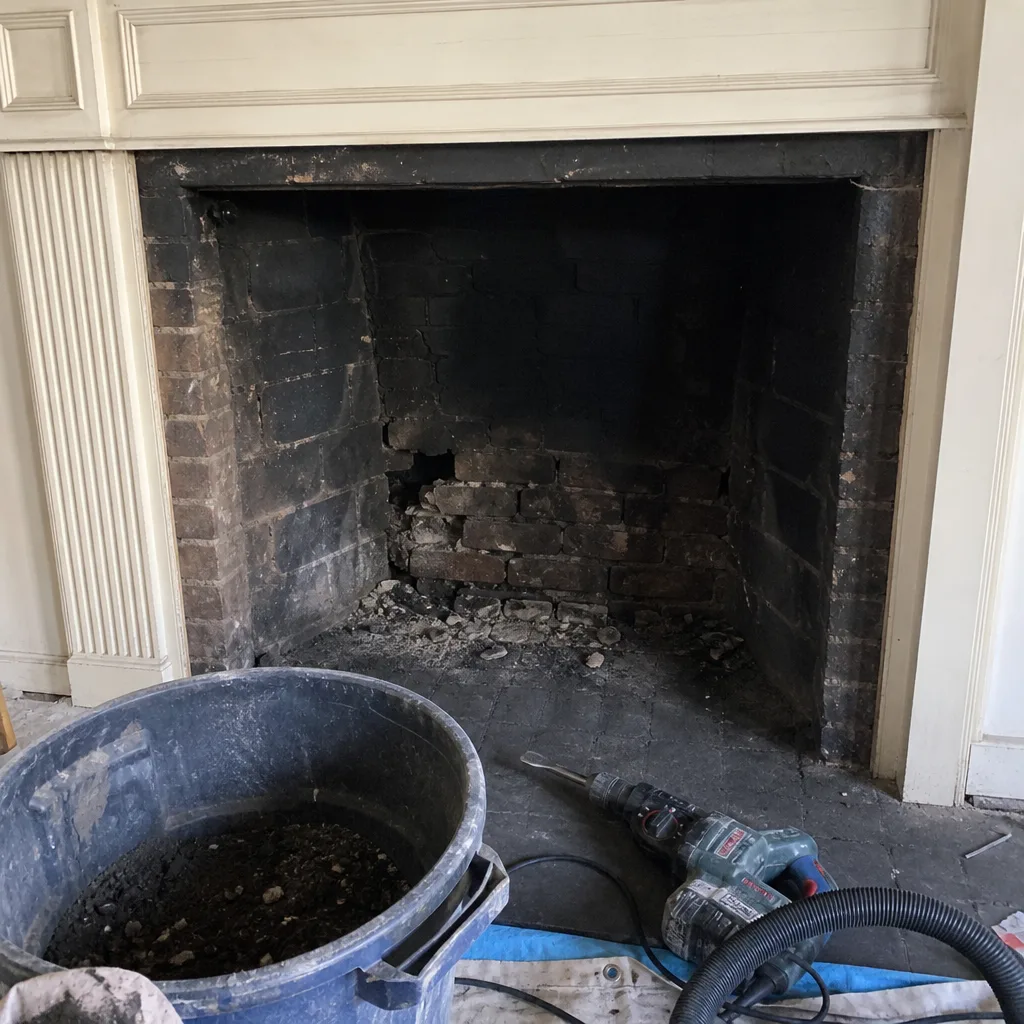 Before
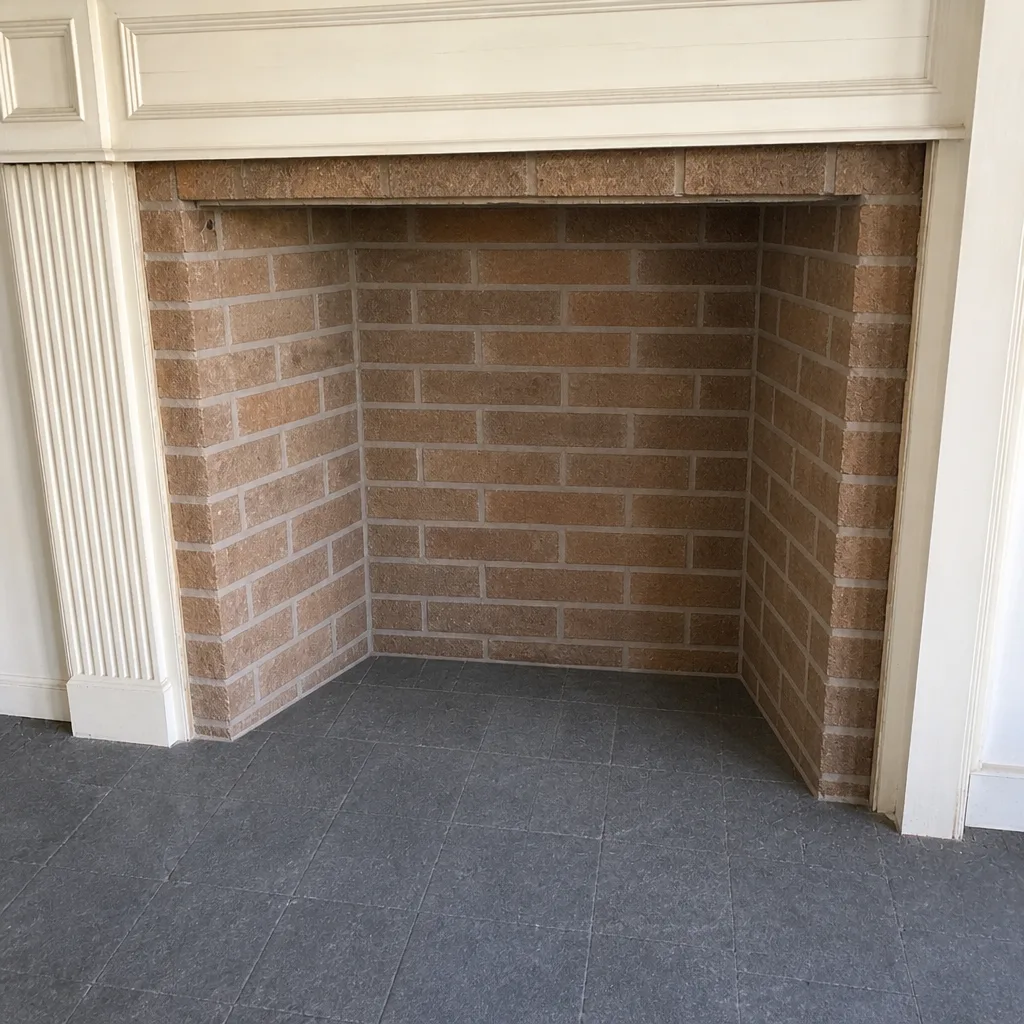 After
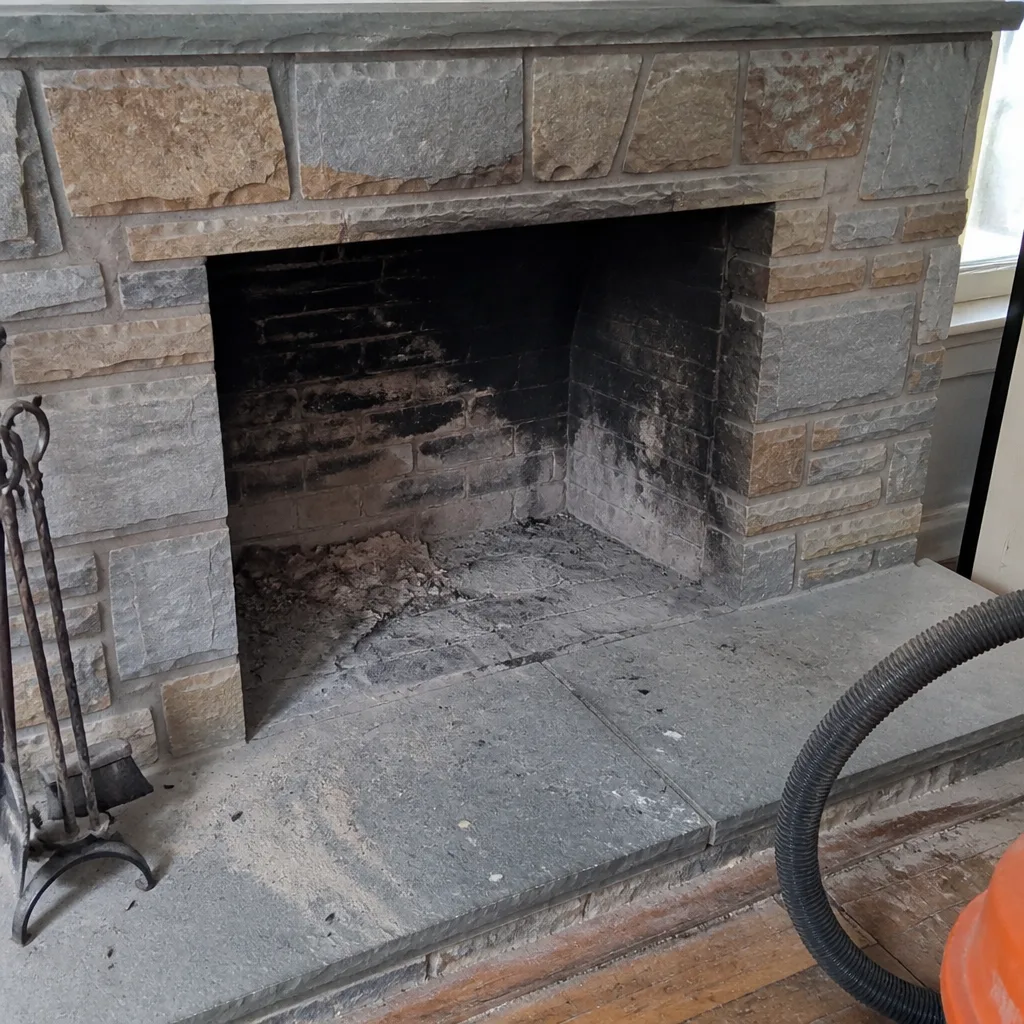 Before
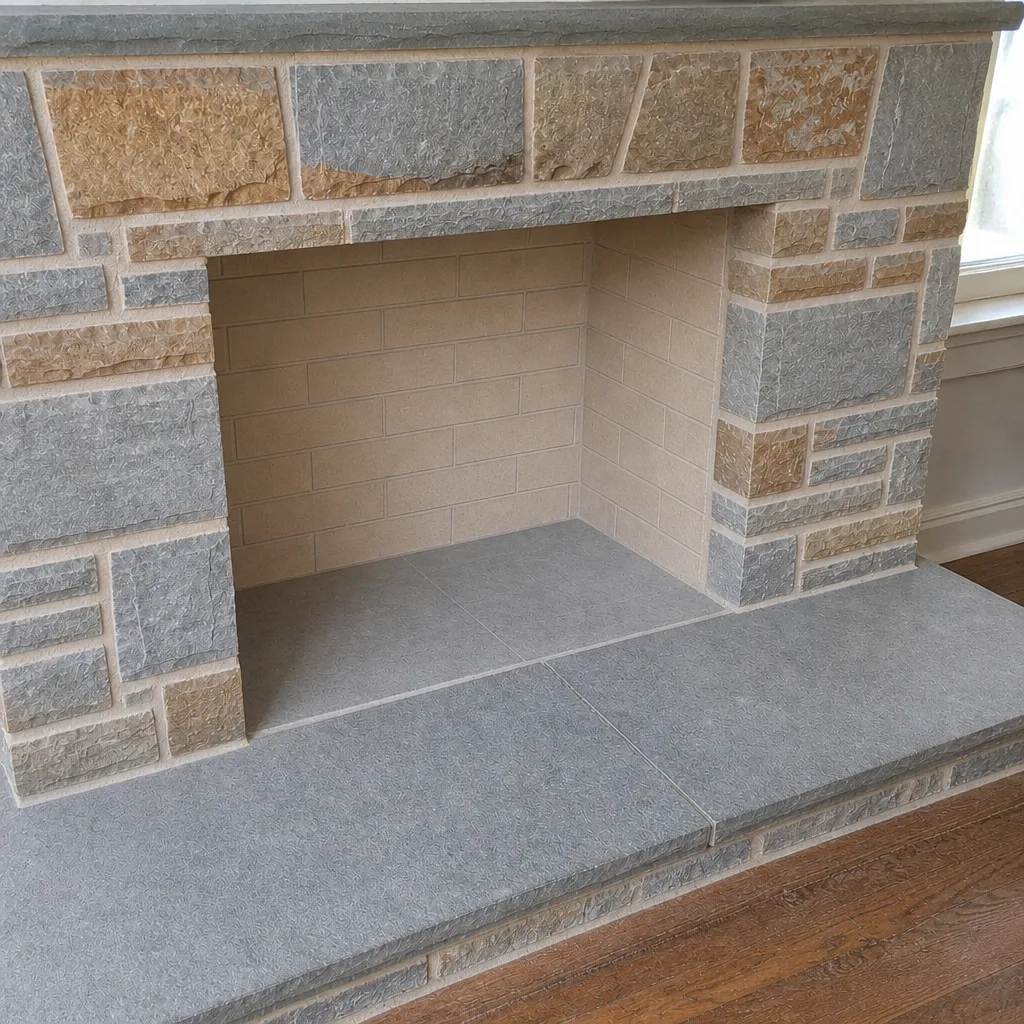 After
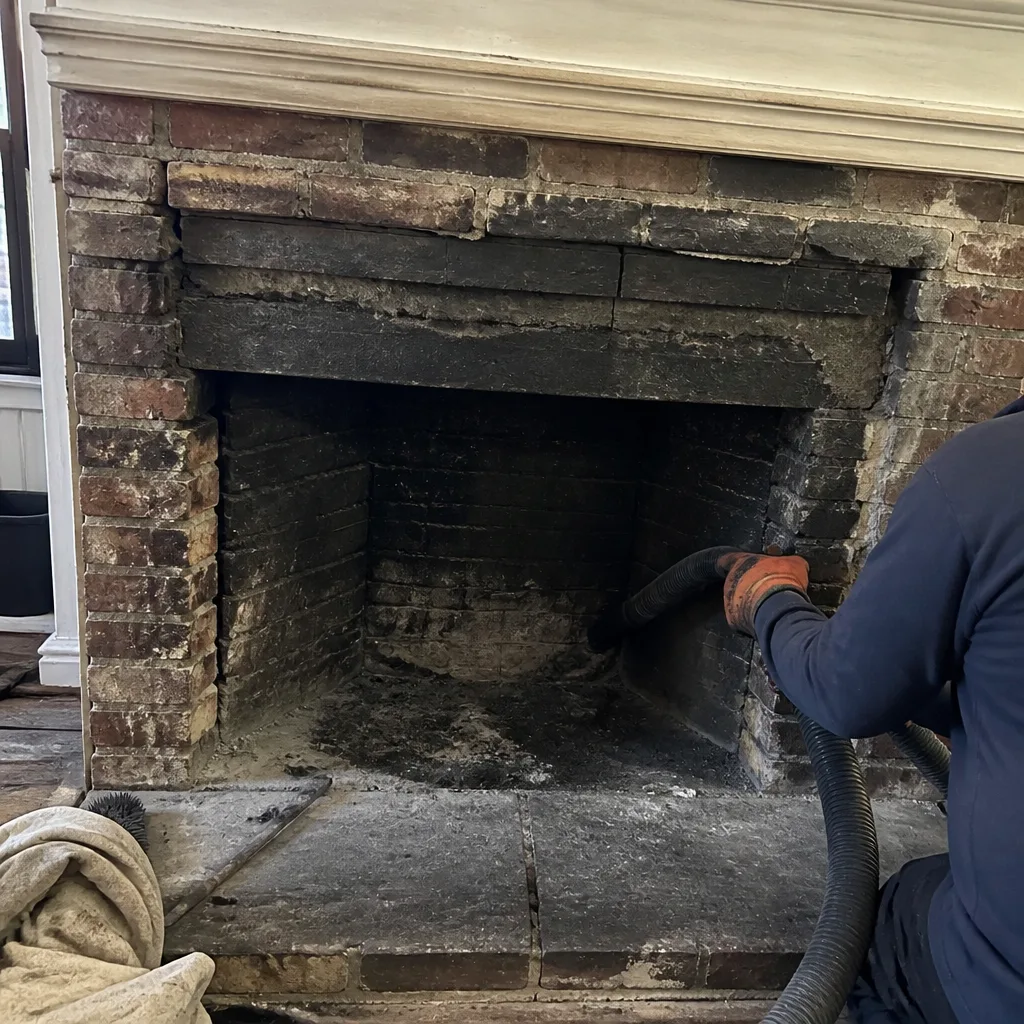 Before
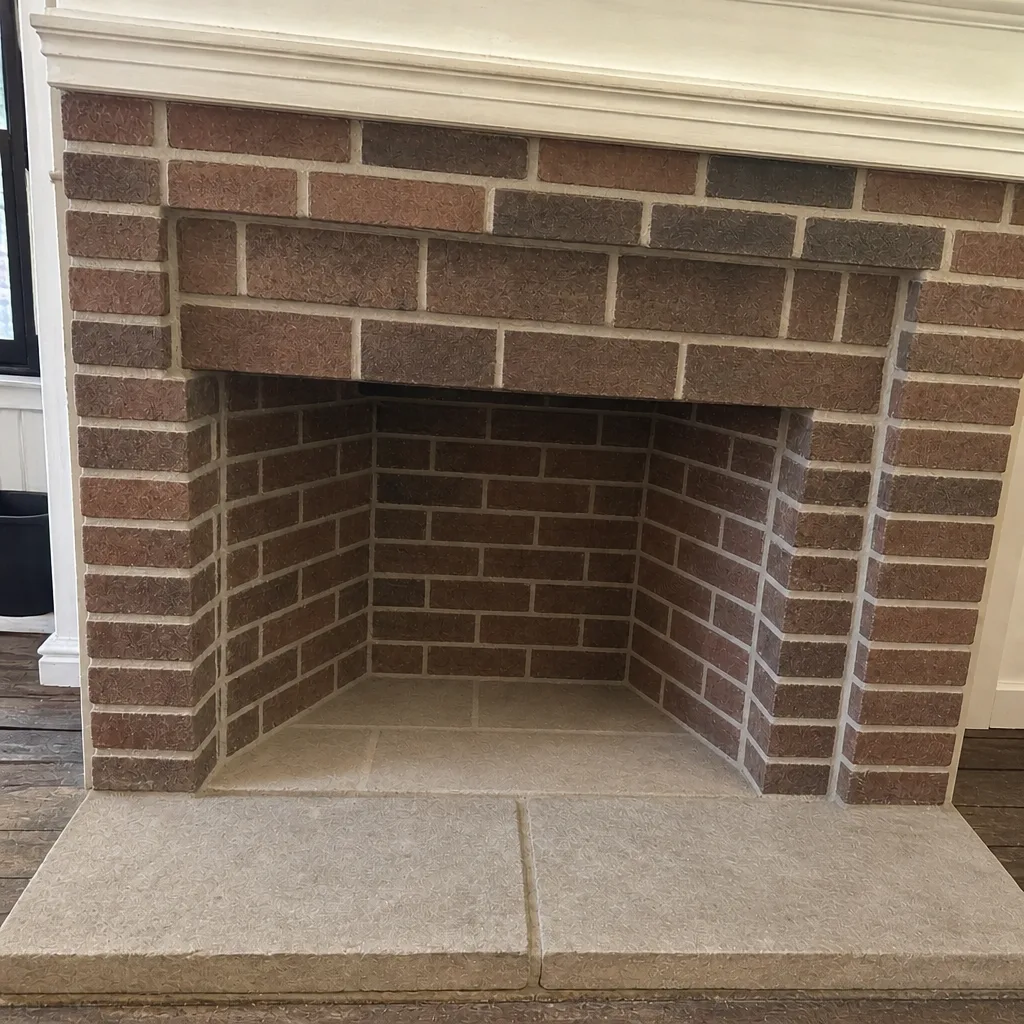 After
When to Call a Professional
Call a professional the moment you find spalled faces at the base of the chimney or a visible crack in the flue, and call before you light another fire if the firebox floor has settled. The same goes for a gas insert with yellow flames or soot on the glass. In Bayside, the annual sweep-and-inspect is the routine call; the signs on this page are your trigger for an earlier one.
Chimney Sweep Bayside offers free estimates in Bayside. Call (833) 482-5742. We answer 24/7, with fast dispatch from 7am to 7pm, Sunday through Friday. Our camera inspection and photo report are included in every sweep and inspection, so you don’t have to take our word for what the flue looks like beyond the firebox – you see it yourself. Structural repairs, liner replacements, crown work, and fireplace repairs from chimney repair to the firebox are handled by the same team that diagnosed the issue. One crew, start to finish.
Frequently Asked Questions
A lazy, sluggish fire that’s harder to start than it used to be and a smoke smell in the room after burning are the two earliest signs. They mean the wood you’re burning isn’t leaving the flue cleanly. Call (833) 482-5742 for a sweep-and-inspect before the deposits harden.
You can wait, but not indefinitely – the white stain means water is already in the masonry, and a Bayside winter freeze-thaw cycle is what cracks brick from the inside. Book an inspection soon rather than waiting for full spring. Call (833) 482-5742 for a free estimate and we’ll see whether it’s a crown, flashing, or joint issue.
Yellow flames across the burner indicate incomplete combustion and a likely venting or gas-flow problem, not cosmetic color. Stop using the insert until a technician checks it, and call (833) 482-5742 to book an inspection.
No. A smoky fire is a symptom with one of four causes – blocked flue, pressure imbalance, undersized flue, or cracked liner – and the last one is a carbon monoxide risk. Have the flue inspected before you use it again. Call (833) 482-5742 for a camera inspection with a photo report.
Once a year if you burn wood regularly, or whenever a full cord has been burned, whichever comes first – oversized deposits and cracked liners progress on that timescale. Call (833) 482-5742 to book a sweep.
Stage 1 is a dusty soot or flaky dark deposit, stage 2 is hard and crusty, and stage 3 is glassy and tar-like – the most flammable and the one a brush alone won’t remove. You shouldn’t inspect the flue interior yourself; a sweep with a camera will show you the condition. Book an inspection at (833) 482-5742.
The Bottom Line
The warning signs on this page are useful only if you can sort them. White staining and spalled brick mean water has been through the masonry and the exterior needs repair. Yellow flames and sooty glass on a gas insert mean incomplete combustion and a venting problem. A settled firebox floor and a visible crack in the flue are stop-use conditions. And a smoky fireplace needs an inspection that shows which of the four likely causes you actually have. Chimney Sweep Bayside handles every part of that list, from the sweep itself to caps, crown work, liners, and fireplace repair, from the firebox to the chimney cap. The best way to use this guide is simply to notice more, then let a trained eye confirm what you’re seeing, camera in hand, before it costs you.
Written by the team at Chimney Sweep Bayside.